
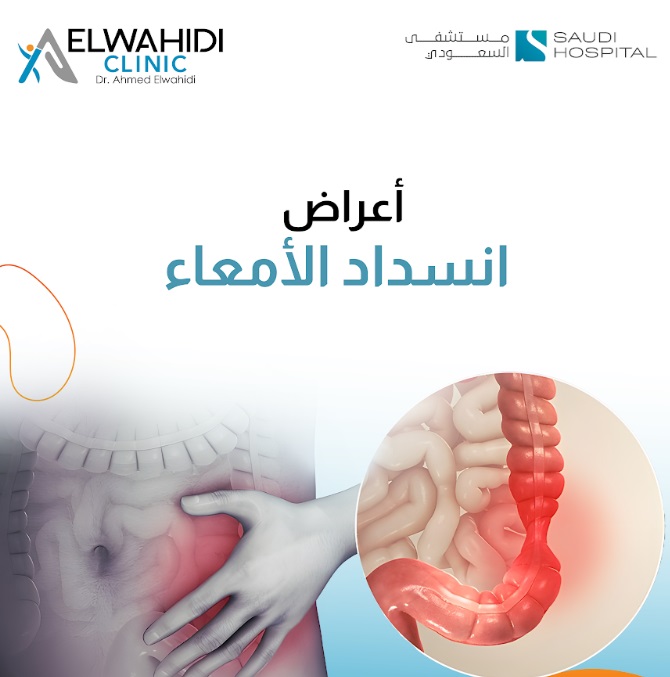
انسداد الأمعاء
انسداد الأمعاء هو حالة طبية جراحية تتطلب تدخلاً جراحياً طارئاً. يحدث انسداد الأمعاء عندما يتوقف الطعام أو السوائل عن المرور عبر الأمعاء الدقيقة أو الأمعاء الغليظة. يُعتبر هذا الانسداد حالة خطيرة، ويتطلب التدخل الجراحي الفوري لتجنب مضاعفات خطيرة مثل انفجار الأمعاء أو الغرغرينا.
Types of bowel obstruction
Small bowel obstruction: Most obstructions (approximately 80%) happen in your small intestine.
Large bowel obstruction: Your large intestine includes your colon and rectum. It continues the nutrient absorption process that starts in your small intestine. It also transforms food and water into waste material you pass as stool. Large bowel obstructions account for about 20% of all intestinal blockages.
also bowel obstrucion can be classified as complete, parial and pseudo.
What causes a bowel obstruction?
Abdominal adhesions (scar tissue) from surgeries:
Hernias: Segments of your intestine may break through a weakened section of your abdominal wall.
tumors: tumors may form in your intestines or spread there from other parts of human body (metastatic cancer).
Other causes of bowel obstructions include:
Inflammatory bowel disease (IBD)
Diverticulitis: Diverticulitis occurs when small pockets called diverticula form in your colon and become inflamed.
Intussusception: Intussusception is the main cause of bowel obstructions in children younger than 3.
Volvulus: Some infants are born with a congenital condition (present at birth) called malrotation, where their intestines don’t form properly.
Radiation therapy to your abdomen, pelvis or rectum: Radiation enteritis is a complication of radiation therapy that occurs when the radiation causes scarring in healthy tissue.
Ingesting a foreign object: Eating something your body can’t break down and process (like non-food items) can obstruct your intestines.
symptoms of small bowel obstruction
Abdominal pain, cramping or bloating.
Nausea and vomiting.
Lack of appetite.
Malaise (an overall feeling of illness).
Diarrhea (usually a sign of a partial blockage).
Rapid heartbeat, dark-colored pee (urine) and other signs of dehydration.
Severe constipation (in cases of complete obstruction, you won’t be able to pass gas or poop).
العلاج:
علاج انسداد الأمعاء
السوائل الوريدية (IV): تُستخدم السوائل الوريدية لتعويض السوائل ومعالجة الجفاف من خلال إضافة الإلكتروليتات.
أنبوب أنفي معدي: قد تحتاج إلى أنبوب أنفي معدي لشفط السوائل والهواء المتراكم نتيجة الانسداد.
الأدوية: قد تحتاج إلى أدوية مضادة للغثيان والقيء، بالإضافة إلى مسكنات للألم لتوفير الراحة.
راحة الأمعاء: قد تحتاج إلى الامتناع عن تناول الطعام أو الشراب لإعطاء الأمعاء الوقت لإزالة الانسداد أو العودة إلى حجمها الطبيعي.
الجراحة: من المحتمل أن تحتاج إلى جراحة إذا كان هناك انسداد كامل في الأمعاء.
الدكتور أحمد الوحيدي قد يقوم بإزالة الالتصاقات أو الأورام التي تسبب الانسداد. نادرًا، قد يحتاج إلى إزالة أجزاء مريضة من الأنسجة.