
Appendicitis :What Is It and How to Deal with It?
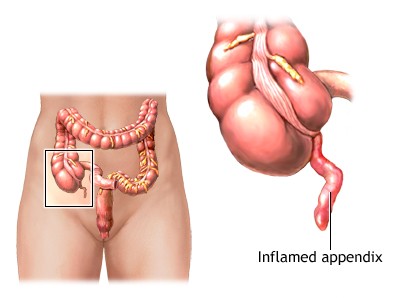
The appendix is a small, finger-shaped organ connected to the colon in the lower right part of the abdomen. Although the appendix is considered a non-essential organ in the body, it can become inflamed, leading to a condition called appendicitis, which requires immediate treatment.
Appendicitis can affect anyone, but it is more common among individuals between the ages of 10 and 30.
The Causes :
Appendicitis often occurs due to a blockage in the appendix, leading to the buildup of bacteria and resulting in an infection. Potential causes for this blockage include:
- Appendicolith: These are solid accumulations of stool that can block the appendix, contributing to bacterial growth.
- Lymphoid hyperplasia: This occurs when lymphatic tissue in the appendix swells due to an infection elsewhere in the body.
- Colitis: Inflammation of the colon that can spread to or irritate the appendix.
- Tumors, parasites, or cystic fibrosis: These conditions can contribute to the blockage of the appendix.
The Symptoms :
Symptoms of appendicitis include:
- Abdominal pain: It usually starts around the belly button and gradually moves to the lower right abdomen, where it becomes sharper.
- Nausea and vomiting: These may accompany the abdominal pain.
- Loss of appetite: The affected person often feels a lack of desire to eat.
- Fever: Inflammation may cause a rise in body temperature.
- Diarrhea or constipation: Digestive disturbances may occur due to the impact on the intestines.
- Bloating and gas.
The Diagnosis :
There is no single test that can definitively confirm appendicitis, and the diagnosis requires a clinical examination along with a series of tests, including:
- Blood tests: To detect the presence of infection.
- Urine analysis: To rule out kidney or urinary tract issues.
- Imaging tests: Such as ultrasound or CT scans to identify inflammation of the appendix.
The doctor will analyze these test results together to make the appropriate decision.
The Treatment :
The primary treatment for appendicitis is surgical removal of the appendix. There are two types of surgery available:
- Traditional appendectomy: Involves a large incision in the abdomen.
- Laparoscopic appendectomy: Involves several small incisions in the abdomen and is characterized by faster recovery and less pain.
Before surgery, antibiotics may be administered to treat the infection.
Recovery After Appendectomy
Most people recover from appendicitis within one to two weeks after surgery. If complications such as a ruptured appendix occur, recovery may take longer.
The Complications :
If appendicitis is not treated, serious complications may arise, such as:
- Ruptured appendix: This leads to the spread of infection in the abdomen, which is a life-threatening condition requiring emergency surgery.
- Abscess: If the appendix ruptures, an abscess may form in the abdomen, requiring surgical drainage.
Appendicitis is a medical condition that requires prompt attention and often surgical intervention. If you experience gradually increasing abdominal pain, particularly in the lower right side, do not hesitate to consult Dr. Ahmed Elwahidi a consultant in general surgery and gastrointestinal surgery, for evaluation and appropriate treatment.